Author: srowner

  • Friday Meditations – 1-3-25 – Rajab & al-Bāqir

    Friday Meditations – 1-3-25 – Rajab & al-Bāqir

    From the Friday Prayer, January 3, 2025

    tl;dr:

    Verses, Traditions, and Readings Quoted:

    ●      Qur’an, Sūrah al-Tawbah (9:36):

    إِنَّ عِدَّةَ الشُّهُورِ عِندَ اللَّهِ اثْنَا عَشَرَ شَهْرًا فِي كِتَابِ اللَّهِ يَوْمَ خَلَقَ السَّمَاوَاتِ وَالْأَرْضَ مِنْهَا أَرْبَعَةٌ حُرُمٌ ۚ ذَٰلِكَ الدِّينُ الْقَيِّمُ ۚ فَلَا تَظْلِمُوا فِيهِنَّ أَنفُسَكُمْ

    “Indeed, the number of months with God is twelve [lunar] months in the register of God [from] the day He created the heavens and the earth; of these, four are sacred. That is the correct religion, so do not wrong yourselves during them.”

    ●      Qur’an, Sūrah Yāsīn (36:40):

    لَا الشَّمْسُ يَنبَغِي لَهَا أَن تُدْرِكَ الْقَمَرَ وَلَا اللَّيْلُ سَابِقُ النَّهَارِ

    “It is not allowable for the sun to reach the moon, nor does the night overtake the day.”

    ●      Qur’an, Sūrah al-Baqarah (2:185):

    فَمَن شَهِدَ مِنكُمُ الشَّهْرَ فَلْيَصُمْهُ

    “So whoever sights [the new moon of] the month, let him fast it;”

    ●      Several Ḥadīths about Rajab: Including Prophetic traditions about the virtue of fasting and performing good deeds in Rajab, and traditions from Imam Ja’far al-Ṣādiq.

    ●      Du’a:

    أَسْتَغْفِرُ اللَّهَ الَّذِي لَا إِلَهَ إِلَّا هُوَ وَحْدَهُ لَا شَرِيكَ لَهُ وَأَتُوبُ إِلَيْهِ

    “I seek forgiveness of Allāh, there is no god save Him, He is alone without any partner, and I repent to Him”

    ●      Common phrase:

    لَا إِلَهَ إِلَّا ٱللَّٰهُ

    Major Takeaways:

    ●      First Sermon: Sacred time in Islam, specifically the month of Rajab, is linked to the created order and serves as a preparation for Ramaḍān. Fasting and increasing good deeds in Rajab are highly recommended.

    ●      Second Sermon: Continues discussion on Rajab citing historical events. There’s an emphasis on a deeper relationship with the Qur’an, and a warning about current events and the need for an anti-war stance.


    In God’s name, the Compassionate, the Merciful  

    Sacred Time and the Month of Rajab

    As we enter the new year of 2025 we also enter the month of Rajab, the month of honor or respect. That raises an imporant topic for reflection: the idea of sacred time.

    When we enter a month, which is, at first glance, simply a convention, and we say that this month has some sort of merit to it, it implies that there is a deeper meaning to the concept of the “month” beyond a conventional indicator of our experience of “time.”

    The 36th verse (āyah) of The 9th Chapter (sūrah) of the Qurʾān: entitled “Repentance” (al-Tawbah) or “Immunity” (al-Barāʾah) states:


    إِنَّ عِدَّةَ الشُّهُورِ عِندَ اللَّهِ اثْنَا عَشَرَ شَهْرًا فِي كِتَابِ اللَّهِ يَوْمَ خَلَقَ السَّمَاوَاتِ وَالْأَرْضَ مِنْهَا

    “That the number of months with Allāh is twelve in God’s book.”


    A month is simply a unit of time. It is a unit of measuring our experience and a mechanism through which we mark events, and we mark our experience of transience, or fluidity, or movement in the physical world. If we think broadly, beyond the lunar calendar, we think about the seasonal changes. We mark the changes of the seasons through our experience; we mark it in relation to our experience of the changes in weather, weather patterns, the time and length of the day, and so on. So, for an example, just to think briefly about the scientific issue: the Earth’s axis is tilted about 23 and a half degrees. When the earth travels around the sun in its orbit throughout the year, that tilt changes the relationship of human beings in the northern and the southern hemispheres in relation to the sun. So, the days are longer during June in the Northern Hemisphere because our hemisphere is tilted toward the sun during this delineation of time. Simultaneously, those in the Southern Hemisphere, their June is their winter because the Southern Hemisphere is further from the sun, so it receives less sunlight. And then as this Earth moves around its orbit, that changes. In  January the Northern Hemisphere is further from the sun, so the days are shorter for us. The time that we receive sunlight is shorter, and we experience colder temperatures. So our experience of the seasons is relative to us and our position on the Earth.


    The Lunar Calendar

    But the lunar calendar establishes a different standard: the relationship vis-à-vis an objective reality other than the sun. The lunar calendar refers to the moon for its markers of time – a synodic calendar. The lunar calendar uses the phases of the moon’s change from a new moon to a full moon and back again to mark time: it measures based on the amount of sunlight reflecting off of the moon’s surface which appears as a waxing and waning of the amount of light reflected over 27.3 days of time.

    So when God says that:


    إِنَّ عِدَّةَ الشُّهُورِ عِندَ اللَّهِ اثْنَا عَشَرَ شَهْرًا فِي كِتَابِ اللَّهِ يَوْمَ خَلَقَ السَّمَاوَاتِ وَالْأَرْضَ 

    “Indeed, the number of months with God is twelve in God’s book, the day when he created the heavens and the earth.”


    We have to ask the question, what is this relationship between  “in God’s book” (fī kitāb Allāh) and the moment when he created the heavens and the Earth? “God’s book” (kitāb Allāh) is not a reference to al-Qurʾān, the scripture. God is not saying the months are 12 because the Qurʾān said so. Rather, God is saying that the months are 12, in the creational book of God glossing “in God’s book” as creation itself (kitāb al-takwīn).We have the legislative book (kitāb al-tashrīʿ) that is the conventional book, that is God’s speech to us, where he gives us rulings (aḥkām) and ethics and narratives (qaṣaṣ) regarding how to behave and think and organize society. And there is also the creational book (kitāb al-takwīn), our relationship with the spiritual and material world itself.

    And so, God created the cosmos, and he made it function in a particular way, that is, as he says in Chapter 36:40 Sūrat Yāsīn:


    لَا ٱلشَّمْسُ يَنۢبَغِى لَهَآ أَن تُدْرِكَ ٱلْقَمَرَ وَلَا ٱلَّيْلُ سَابِقُ ٱلنَّهَارِ ۚ وَكُلٌّۭ فِى فَلَكٍۢ يَسْبَحُونَ 

    Neither it behooves the sun to overtake the moon, nor may the night outrun the day, and each swims in an orbit.


    God created the celestial heavens in a particular way in service to us, and He’s asking us, in a sense, to have a relationship with the cosmos so as to mark certain days and utilize a certain way of thinking about time.

    This gives us the sense that the material reality, the cosmos as a whole, is one of the signs (āyāt), which, of course, is prevalent in the discourse of the Qur’an: that the cosmos is a sign of God. That is, the cosmos as a whole is a combination of the actions of God (afʿāl Allāh),. Every piece of material reality signals back to divinity; that’s the meaning of āyah.


    The Four Sacred Months

    The āyah continues:


    مِنْهَا أَرْبَعَةٌ حُرُمٌ ۚ ذَٰلِكَ الدِّينُ الْقَيِّمُ 

    “Four of these months [out of these 12 that God has mentioned] are sacred. That is the upright religion”


    This is referring to Dhū al-Qaʿdah, Dhū al-Ḥijjah, and Muḥarram, being the 11th, 12th, and the first month, of the year. Those three months, which are back-to-back-to-back, are three of the, sacred months, and then the fourth is Rajab, the seventh month, which is disconnected from those three. These months are sacred (ḥurum) because God has prohibited humankind from engaging in any warfare or battle in those four months. It was a reprieve for humankind to have a third of the year through which security, safety, contemplation of God is all protected, because territorial disputes and material disputes are prohibited during this time. This āyah is  condemning the pre-Islamic Arabs because they would sometimes announce a suspension of these sacred months. They actually believed that Rajab and Dhū al-Qaʿdah and Dhū al-Ḥijjah and Muḥarram were sacred, and thus warfare was prohibited, but they would sometimes suspend it, depending on their whim, because this year we have say, an upper hand on the battlefield. So we’re going to continue warfare during the sacred month, and next year, we’ll continue honoring the peace. God is condemning them and saying: look, we have made these four months sacred for a reason. I have constructed the creational order, don’t play around with it. And so, as many narrations mention this lunar calendar comes from the Abrahamic days. And so, the Arabs were just continuing an ancient tradition that was originated by God.

    The verse continues:


    فَلَا تَظْلِمُوا فِيهِنَّ أَنفُسَكُمْ 

    “So do not wrong yourselves within these four months.”


    That is, God is saying: be diligent in not wronging yourself in these months which have an elevated status: hold back from warfare, hold back from sin, hold back from greed, etc. God is emphasizing to us that we ought to punctuate our years with times of heightened cognizance of Him, with times of heightened contemplation of Him, and altering our social behavior.

    So it’s the day before Dhū al-Qaʿdah, and the battle was raging on, there needs to be an agreement that the battle must stop for the next three months. These are sacred months. So it changes not only the way we think, but it changes the way, not only individuals, but whole societies are supposed to interact with one another. Humankind is prone to warfare, it’s prone to battle, it’s prone to disputation; this is a common element in human relations. God is saying: I understand that, but hold back. Even if it’s a cause for justice, if you can hold back, then hold back. This obligation drops in times of defense, but the moral push and information that emerges from this verse is that the material reality and the conventions of time we operate by actually play a role in supporting the life of the soul and the life of the heart, if we adopt Godly lenses.
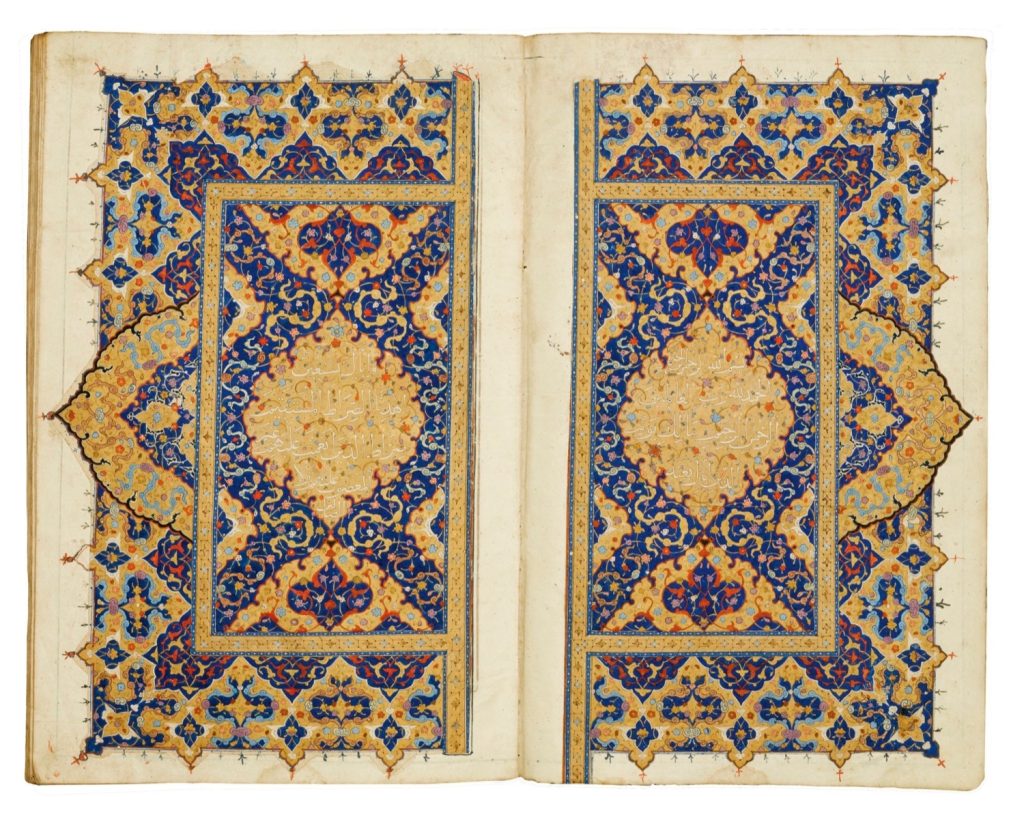

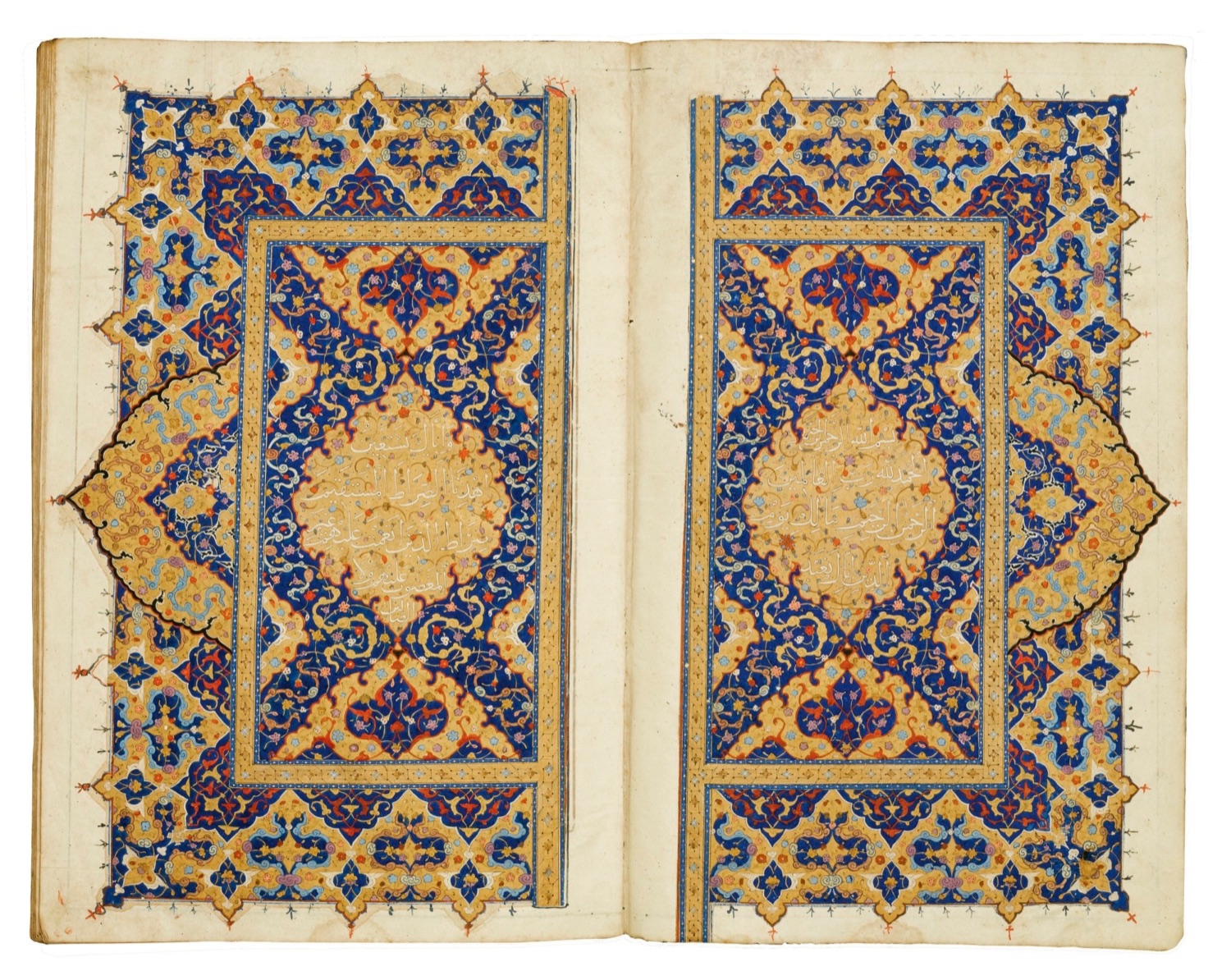
    Two facing pages of an illuminated Qurʾān manuscript, decorated in gold and blue

    Rajab as Preparation for Ramaḍān

    Rajab is a preparatory month for the month of Ramaḍān; it is a unit of time in which we are meant to punctuate our dedication so that we enter the highest period of spiritual dedication, the month of Ramaḍān, with strength and purpose.

    2:185 

    شَهْرُ رَمَضَانَ ٱلَّذِىٓ أُنزِلَ فِيهِ ٱلْقُرْءَانُ هُدًۭى لِّلنَّاسِ وَبَيِّنَٰتٍۢ مِّنَ ٱلْهُدَىٰ وَٱلْفُرْقَانِ ۚ فَمَن شَهِدَ مِنكُمُ ٱلشَّهْرَ فَلْيَصُمْهُ

    The month of Ramaḍān is one in which the Qurʾān was sent down as guidance to mankind, with manifest proofs of guidance and the Criterion. So let those of you who witness it fast [in] it…


    What is seemingly a convention of time measured through the light reflecting off of the moon is given spiritual potential and force: God is saying there’s something important in marking that moment. When this month comes, everything changes, especially in Muslim society: the way you eat, the way you drink, the way you deal with your spouse, etc. all change because God wants us to link our experience with the created order—that is, material, observable reality—with a sacred and moral sensibility.

    This is a powerful notion because it takes material reality, the (al-dunyā) which we usually think about as a veil or a barrier between us and God, and it transforms our conception of the material reality into a mechanism through which we understand and commune with God. Our relationship to the cosmos is meant to spark within us awe and spark within us devotion to God.


    Teachings about Rajab

    Imam al-Sadiq reportedly taught:

    On the first of Rajab, (Prophet) Noah (‘a) embarked on the Ark; he therefore ordered those who accompanied him to fast on that day. If one fasts on this day in Rajab, Hellfire will go away from him a distance of one year on foot. If one fasts for seven days of Rajab, the seven gates of the Fire will close in his face. If one fasts for eight days of Rajab, the eight gates of Paradise will be wide open before him. If one fasts for fifteen days, his request will be granted. If one fasts for more days, he will gain more rewards from Almighty Allah.[1]

    In addition to fasting, it is emphasized to say various litanies (adhkār) and to increase the amount of the Qur’an that we read in the month. As an example, it is recommended to give charity, and after giving charity, to say:


    أَسْتَغْفِرُ اللَّهَ الَّذِي لَا إِلَهَ إِلَّا هُوَ وَحْدَهُ لَا شَرِيكَ لَهُ وَأَتُوبُ إِلَيْهِ

    “I seek forgiveness of God, there is no god save Him, He is alone without any partner, and I repent to Him.”[2]


    Conclusion on Sacred Time

    The upshot of the various recommendations of Rajab is to seek God’s forgiveness, to create a close relationship with him, and to prepare our souls for the month of Ramaḍān. We’ll finish with a long narration, uh, that is mentioned in Shaykh al-Ṣadūq’s al-Amālī. He said that a man named Sālim says:

    I visited al-Ṣādiq Jaʿfar b. Muḥammad in Rajab, there were a few days left of the month. When he looked at me, he said to me: “O Sālim! Have you fasted at all this month?”

    I said: No, by God, O son of the Messenger of God.

    So, he said to me: You have missed out on a reward, that value of which is only known to God. Surely, God gave this month virtue, and He magnified its sanctity. He made His blessing incumbent upon those who fast in it.

    So, I said to him: O son of the Messenger of God! If I fast something of what is left of it, will I receive some of the reward of those who have fasted in it?

    The Imam responded: O Sālim! Whoever fasts one day at the end of this month, it will be a source of safety for them during the pangs of death; and a source of safety for them at the horror of the resurrection and the punishment of the grave. Whoever fasts two days at the end of this month, they will be able to pass safely upon the Path due to it. Whoever fasts three days at the end of this month, it will be a source of safety from the horror and the severity of Great Day of Fear; and it will separate him from the Fire.[3]

    Rajab is a sanctified and sacred month that we are disconnected from because of the mechanical age, because of the way we calculate time. When we work to revive the more traditional conception of human life with the cosmos that we’re interconnected with it, that we are one and part, parcel of it, it humbles us and puts us back in proper alignment with reality. We are not lords as the Modern West conceives of it. We are not lords of the Earth such that we exploit it for our own profit, such that we exploit it at any cost, even at the cost of the Earth’s ruin. Rather, the Earth, the cosmos, the moon itself functions as a mechanism for us to recognize that there is embedded within it moments of sanctity, moments of sacrality, and moments of great bounty that we are able to attach ourselves to. Attempting to sight the moon is one way of reconnecting ourselves with a slower and a more natural and, indeed, a more spiritual relationship to the cosmos.


    Historical Significance of Rajab

    Rajab is also an important unit of sacred time because of the sacred history that occurred within it. The delegation of prophethood to Muḥammad al-Muṣtafā (ṣ) (al-biʿthah) occurred on the 27th of Rajab. The birth anniversary of ʿAlī ibn Abī Ṭālib (ʿa) occurs on the 13th. The martyrdom anniversaries of the seventh Imam, al-Kāẓim (ʿa), and the 10th Imam, al-Hādī (ʿa), occur within it. And, as has already passed, on the first of Rajab, the birth anniversary of Muḥammad al-Bāqir (ʿa) occurs within it. So Rajab is full of sacred history that we revive, we do iḥyāʾ (revival) within this month as a way of reconnecting to these personalities and these moments—the biʿthah in particular There are many narrations that that speak about fasting on the day of biʿthah itself as being one of the most meritorious acts in the month of Rajab.


    Imam Muḥammad al-Bāqir

    Muḥammad ibn ʿAlī al-Bāqir is the grandson of Imam al-Ḥusayn, the son of Imam ʿAlī ibn al-Ḥusayn Zayn al-ʿĀbidīn. He was born in the year 57 after Hijrah (Migration). Something that sometimes we overlook, or we’re not familiar with, is that he was present at Karbalāʾ. He was a three-year-old present in the tents when his grandfather was martyred .

    His honorific, al-Bāqir , is shorthand for Bāqir al-ʿIlm. Baqara means to cleave open, to split open; he is known as the person who opened up sacred knowledge to the community.

    He is respected in both Sunnī and Shīʿī traditions. Something that folks in the Shīʿī tradition don’t know is that in the Sunnī tradition, al-Bāqir is known as a great jurist (faqīh) andin Sufi circles is known as a greatscholar of spiritual wayfaring. Al-Dhahabī (d. 748/1348) is a Sunnī muḥaddith (traditionist) and historian—a strong Sunnī—and he had some very strong negative feelings against, Ahl al-Tashayyuʿ —yet he says the following about him:

    “Al-Bāqir was an individual who possessed all the virtues of religious knowledge, pious works, wisdom, honor, trustworthiness, nobility, dignity, and solemnity. He was entitled to the Caliphate. Abū Jaʿfar was famously known as al-Bāqir, a term that derives from baqara al-ʿilm, meaning the revealer of knowledge, a reference to his ability to know the various forms of knowledge, the apparent and the hidden.”[4]

    So he recognizes his spiritual status and knowledge. Now, if you read the details al-Dhahabī and mainstream Sunnī tradition conceives of him as a great Sunnī Imam. And there are many narrations in their books that indicate that he had a Sunnī orientation rather than a Tashayyuʿ orientation. But be that as it may, in the great overlap between the two schools about the importance of knowledge, the importance of the Qurʾān, the importance of our relationship to the Prophet (ṣ) there is a shared heritage, both in al-Bāqir and his son, al-Ṣādiq.


    A Ḥadīth from Imam al-Bāqir about Reciters of the Qurʾān

    Al-Bāqir was deeply associated with the Qurʾān, and he leaves us with the following heavy teaching:

    “The reciters of the Qurʾān are of three types:

    1. A person who recites the Qurʾān and takes it as a commodity, seeking favor from kings and using it to elevate themself over people.
    2. A person who recites the Qurʾān, preserves its words but neglects its boundaries.
    3. A person who recites the Qurʾān and applies its remedy to the ailments of their heart. They stay awake at night with it, thirst during the day because of it, stand with it in their places of prostration, and distances their selves from their bed with it.

    Through these [the people of the third type of reciter], the Almighty, the Compeller, wards off calamities, grants victory over enemies, and sends down rain from the heavens. By God, these reciters of the Qurʾān are rarer than red sulfur (al-kibrīt al-aḥmar).”[5]


    Al-Bāqir mentions that there are three classes of reciters, qurrāʾ (reciters), of the Qur’an.

    The first class is a person who “recites the Qurʾān and takes it as a commodity, seeking favor from Kings, and using it to elevate himself over people.”

    In this early period Qurʾān memorizers (ḥuffāẓ) and reciters (qurrāʾ) had a positive social status. Any time social status comes along with any profession or any hobby or any form of learning, then there’s always the tendency for the human soul to see self interest through it. So al-Bāqir says that there is the person who takes the Qurʾān as a commodity, as a way of elevating his or her status, as a way of perhaps getting in the courts of the Kings. These disciplines were given social and even political value.

    The second class is an individual who “recites the Qurʾān, and they preserve its words, but they neglect its boundaries.” Perhaps they are strong in their understanding of when an āyah ends and when it begins, and if you give them an āyah in the middle of the Qurʾān, they’ll continue it because they have it so locked up into their memory. But many of them don’t have a relationship to the spiritual meanings and the commands of the Qurʾān. It’s kind of a, uh, trope, I think, in Western Muslim circles that we know peers ḥuffāẓ thatgo drinking on the weekends. Perhaps they were forced to memorize as a child, but they didn’t internalize the meanings of the Qurʾān.

    The third class is an individual who “recites the Qurʾān and applies its remedy to the ailments of their heart. They stay awake at night with it, thirst during the day because of it, stand with it in their places of prostration [that is, through prayer], and distances their selves from their bed with it”—,eamomg they have a longing for scrpiture such that they lessen their sleep so that he can read it.

    “Through this third set of reciters, the Almighty, the Compeller, wards off calamities, grants victory over enemies, and sends down rain from the heavens. By God, these reciters of the Qurʾān are rarer than red sulfur,” 

    In sum, our relationship with the Qurʾān has to be dynamic. It must be a relationship that is imbued with meaning. It must be a relationship in which we understand the meanings of the Qurʾān. It cannot be parroting; it cannot be mere recitation. It must be, as comes from his name al-Bāqir, connected with knowledge (al-ʿilm).

    When I read this ḥadīth, and he says that these rare reciters are people who stay up late in order to recite, in order to study, to contemplate the Qurʾān, and I think about the many hours I’ve wasted watching the NBA or Netflix or whatever, I sense that this teaching is a deep critique against our entertainment lifestyle.

    And this isn’t a “Western” problem. What happens during the month of Ramaḍān in Muslim countries? There are advertisements in the run-up to Ramaḍān for a new serial out of Turkey, a new serial out of Jordan, and other movies and entertainment. Some of them are religious in nature, there’s nothing wrong with it in principle. But when I reflect on the amount of time I apportion to trying to understand God’s book (kitāb Allāh) versus the amount of time I just chill out, hang out, watch something that somebody else contrived, I sense a deep problem with priority of values.

    That is why Imam al-Bāqir says that these, these reciters are as rare as al-kibrīt al-aḥmar. Al-kibrīt al-aḥmar is an allusion to the red sulfur that alchemists were always on the search for in order to transmute base material substances into something valuable: iron into gold, for instance. It represents an idea: this secret substance, this sacred substance, that would give meaning and value to mundane reality. He’s likening that to a reciter who applies the ointment of the Qurʾān to his or her heart. Of course, the teaching could be an allusion to the Imams themselves as the highest standards of this class of reciter. But it is also a motivating teaching: for us to deepen our relationship with the Qurʾān, especially in this month of Rajab, leading into the month of Shaʿbān, and then peaking, with the month of Ramaḍān.


    Current Events and the Need for an Anti-War Stance

    As we’ve entered 2025 we’ve seen great changes in the geopolitical boundaries of the Middle East. These same great changes in the Muslim world will, hit back at us, or will affect us here domestically. Regarding the truck ramming on January 1st by Shamsud-Din Jabbar in New Orealns will serve as a media event and news cycle which manufactures consent for anti-Palestinian policies and further militarism in the Muslim world. The New York Times had immediate coverage claiming that this attack was influenced by Lebanon and Gaza. An ex-IDF soldier who works as a journalist for the New York Post was given special access to the attacker’s home where she claims that she found a bomb-making stand and a kufiyyah and other paraphenalia attemping to link him to the movement for Palestinian liberation.  Despite having a history of drunken driving and being a US military veteran, he’s cast as an international terrorist who’s threatening American lives on behalf of an international resistance movement. They also reported that they found an ISIS flag, and he joined ISIS, and it just happened to be laying in the street right after he rammed into all of these people and so on—you should notice the disparate and, often discordant, attempts to link him to some international threat to public safety and national security.

    Whatever the details end up becoming, whatever the truth of the matter, whatever the intentions behind this individual’s attack, whatever his actual connections to ISIS or not are, or were, the media and the government is going to utilize this story as a way of creating public consent for geopolitical exploitation by the US. The US is creating a new military base in Syria because Turkey is trying to go after the Kurds, and there’s a whole conflict raging there. It seems to me this is an attempt to create the political conditions needed for another invasion: as some analysts are saying, Iran is next on the list of countries that Israel will want to go after to further weaken the Muslim political and social presence in the Middle East.

    Regardless of your particular assessments of the details of what’s happening in Syria, in Lebanon, and in Gaza, we need to be, as a community, wary of social manufacturing for military adventures in the Middle East. In my mind one of the most powerful mechanisms that we have in our hands as citizens of this country is to renew an anti-war movement in America. An anti-war movement creates alliances between people who might differ on the details and the meanings of certain conflicts by identifying a root cause of division in the Muslim world: American militarism and its support of Israel. Whatever the details of the geopolitical stances we take about the Middle East and specific conflicts in that theater, getting America out of the Middle East is an important precondition for any safety and stability and growth of peoples in that region. Indeed, this principle is key toward all regions of the world that are suffering from American hegemony. If there’s anything that we’ve learned since 2001, it is that we need to be engaging only with the government or during voting seasons, but we need to be talking to our neighbors, talking to our colleagues, talking to our friends and family who may not be on board with us so that we undercut any manufacturing of consent for further exploitation of our people. We ask God to rectify the affairs of the Muslims and all peoples of conscience and of the oppressed.

    [1] al-Hurr al-ʿĀmili, Wasāʾil al-Shīʿah 7:348, H. 1 & 2

    [2] al-Hurr al-ʿĀmili, Wasāʾil al-Shīʿah 7:359, H. 3

    [3] https://thaqalayn.net/hadith/29/1/4/7

    [4] al-Dhahabī, Siyar Aʿlam al-Nubalāʾ (Beirut, 1981), Vol. 4: 401–409
    [5] https://thaqalayn.net/hadith/9/5/5/10

  • Friday Meditations – Vices and Virtues: On Despair

    Friday Meditations – Vices and Virtues: On Despair

    From The Friday Prayer – January 26th, 2024 

    Disclaimer

    Before we dive into the analysis of the vices of despair (al-yaʾs) and despondence (al-qunūṭ) we need to make a note. Today, we often talk about despair, despondence, depression as a clinical reality—a mental-health issue. We should not conflate the physiological/mental analysis of depression with the spiritual vice of despondence or depression. These do not match one-to-one; there may be a complex set of relations and interactions between the two but that is beyond the scope of these reflections.

    So, as a disclaimer: we want to make sure that when we talk about depression or despondency as a spiritual deficiency we don’t conflate that with mental-health struggles. The analysis “clinical depression indicates a weakness in faith” does not hold and so remembrance of God (dhikr Allah) is not necessarily a comprehensive prescription just as it isn’t a comprehensive prescription for a broken leg.

    The Spiritual Vice of Despairing of God

    The Qurʾan uses two terms to describe this vice of despair: al-yaʾs and al-qunūṭ (ending in a ط as separate from qunūt ending in a ت  which is to supplicate). Yaʾs is to feel bereft of hope in relationship to God; qunūṭ is to manifest that feeling in action. Some lexicographers consider them synonyms. At any rate, they are related terms with many considering qunūṭ to be more intense.

    Why is this a taboo? Why can’t I feel despair? If we’re defining it as a vice, that means that there’s a moral measure here. What is the moral assessment of despair and despondence?

    Yūsuf 12:87 

    إِنَّهُ لَا يَيْأَسُ مِن رَّوْحِ اللَّهِ إِلَّا الْقَوْمُ الْكَافِرُونَ 

    Indeed no one despairs of God’s mercy except the faithless lot.

    This phrase is stated by Jacob (Yaʿqūb) whose son Joseph (Yūsuf) is missing since, out of envy, his other sons let him to die in a well. And so Jacob tells his sons, “Look, Joseph might still be out there. Go search for him.” To strengthen their resolve (and, perhaps, to trigger their consciences) he reminds them that no one despairs of God except the disbelieving people, al-qawm al-kāfirūn.

    It is tantamount to disbelief to not believe that God will carry the day, to not believe that at the end of the day, despite my powerlessness, despite the difficulties I’m facing in my life, whether my material situation gets better or not, God is going to take care of me—either in this world or in the eternal abode.

    The ICJ says that Israel’s actions are potentially genocidal, but they cannot enforce their ruling to cease all killing in Palestine. The Palestinians believe that, despite there being deep injustice via constant massacres, God will take care of us into eternity.

    Without hope and conviction, despair sets in. And Jacob says, as a father who has lost his son and who has been searching for his son and is not sure if he’s going to find him in this life or not, “don’t despair.” He’s the one suffering. “Don’t despair.” Only those who lack faith, only those who reject a higher reality, slip into the darkness of the world, slip into despondency vis-a-vis Reality itself.

    Abraham (Ibrāhīm) also uses the word qunūṭ to describe a value judgment:

    Al-Ḥijr 15:55 

    مَن يَقْنَطُ مِن رَّحْمَةِ رَبِّهِ إِلَّا الضَّالُّونَ

    ‎He said, ‘Who despairs of his Lord’s mercy except the astray?!’

    Why the condemnation? Because of the effects. Despair is a hidden form of disbelief or misguidance because it is rooted in and caused by weak theological reflection or ignorance. And what it produces—its effect—is that we arrogantly take the load on our own shoulders when we are in total and utter hopelessness regarding the mercy of God (Rahmat Allah) and regarding God giving us a way out of our difficulties. “I have to do it. I will do it through my material means.”

    If we’ve denied that God will have mercy upon us—which is the implication of despairing in God’s mercy—then we tend toward material pleasure. If you don’t believe that God is going to forgive you, then why would you hold yourself back from vice? Why would you hold yourself back from tyranny? Why would you hold yourself back from “getting yours” at any cost? This attitude will leave us drowning in the mire of materiality (dunyā).

    Al-Fatḥ 48:6 

    وَيُعَذِّبَ الْمُنَافِقِينَ وَالْمُنَافِقَاتِ وَالْمُشْرِكِينَ وَالْمُشْرِكَاتِ الظَّانِّينَ بِاللَّهِ ظَنَّ السَّوْءِ ۚ عَلَيْهِمْ دَائِرَةُ السَّوْءِ ۖ

     That He may punish the hypocrites, men and women, and the polytheists, men and women, who entertain a bad opinion of God.

    Here God states that He will rebuke the hypocrites and polytheists due to a root cause: that hypocrisy (nifāq) and polytheism (shirk) arise from thinking ill of God; they require having a corrupt conception of who God is. We can have a positive assessment (ḥusn al-dhann) of God or you can have negative assessment (sūʾ al-dhann)—that you think God is out to get you; You think that God is a tyrant, as some Western trends of thought think; or you think that God doesn’t care about you. This form of thinking leads to rejecting Reality (kufr) or hypocrisy (nifāq).

    The Cure

    Hope is the cure. Properly understanding the power and desire of God is the cure. Growing in faith is the cure. So, what is faith? 

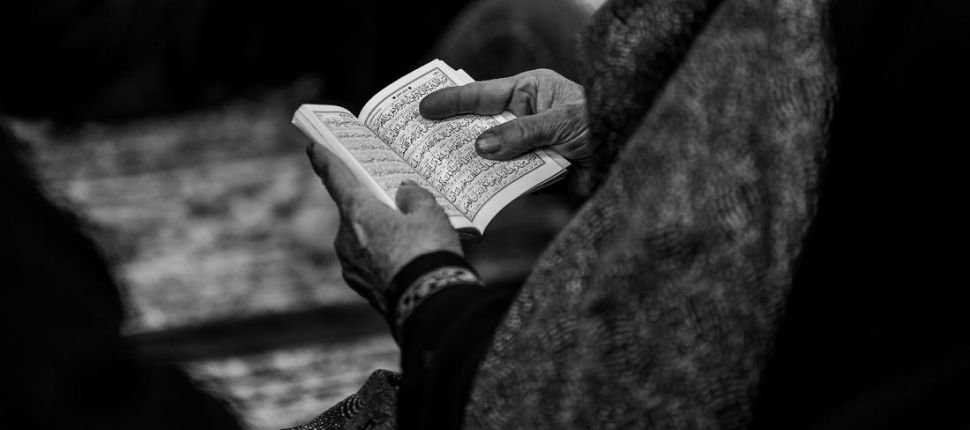
    Hands holding an open Qurʾān, in black and white

    Many scholars say it is knowledge (ʿilm) and assent (tasdīq). However, this falls short. Faith is not just a math problem to which you can assent upon recognition its truth. You can have the proofs of God’s existence and assent to them, yet still reject God. See: Satan.

    Some scholars say it is knowledge plus deeds – but this too falls short for you can know and act, but have hypocrisy in the heart—to be duplicitous or to act in one’s self-interest.

    Faith, according to ʿAllāmah Sayyid Muḥammad Ḥusayn Ṭabāṭabāʾī, is to have knowledge of God, to assent to that knowledge, and to make oneself answerable for it by an inseparable obligation.

    Faith must have a quality of desire that accompanies knowledge and assent: to want to be with God, to love Him, to desire Him, to hope for His mercy, to be open-hearted. Or to be in Awe of Him and to want to obey Him at any cost. Faith requires an inner moral quality that elevates us beyond robotic ritual. 

    When a relationship or a marriage goes wrong it is not always due to a crisis. Relationships often weaken because they get “stale.” You’re going through the motions. You take each other for granted. You’re living together but there is no spark.  

    You can revive the relationship through re-realizing the internal beauty of your partner; through remembering the good times; through remembering the benefits you bring to each other’s lives – and through that to want to make each other happy again; to work for each other through an internal, independent desire that brings meaning back to the relationship.

    In a similar way, our relationship with God must be dynamic. We must have a component of yearning. It may be through a “positive” quality of love and desire or it could be “negative” through fear and awe—in both cases they are dynamic. And in both cases the dynamism is based upon a proper recognition of God’s power and our total dependence on Him; knowledge of our spiritual anthropology is necessary.

    In a prayer from al-Ṣaḥīfat al-Sajjādiyyah (Prayer 39), Imam ʿAli b. Ḥusayn Zayn al-ʿĀbidīn beautifully illustrates an approach to having trust and hope in God’s mercy while despairing in one’s self—one’s own independent power. 

    …Do that, my God, for one whose fear of You is greater than his craving from You,
    whose hopelessness of deliverance is firmer than his hope for salvation!
    Not that his hopelessness (yaʾsuhu) is despair (qunūṭan),
    nor that his expectation is deluded.
    No, rather his good deeds are few among his evil deeds
    and his arguments are frail in face of everything due from his acts…
    [1]

    Ultimately, our destiny lies in the hands of the One who gave rise to us in the first place; the One who speaks to us as such about His relationship to us:

    Al-Zumar 39:53

    قُلْ يَا عِبَادِيَ الَّذِينَ أَسْرَفُوا عَلَىٰ أَنفُسِهِمْ لَا تَقْنَطُوا مِن رَّحْمَةِ اللَّهِ ۚ إِنَّ اللَّهَ يَغْفِرُ الذُّنُوبَ جَمِيعًا ۚ إِنَّهُ هُوَ الْغَفُورُ الرَّحِيمُ

    Say [that Allah declares,] ‘O My servants who have committed excesses against their own souls, do not despair of the mercy of Allah. Indeed Allah will forgive all sins. Indeed, He is the All-forgiving, the All-merciful.

    So, what can we do but be filled with hope beautifully balanced by awe of the Ineffable?

    [1] https://www.al-islam.org/sahifa-al-kamilah-al-sajjadiyya-imam-ali-zayn-al-abidin/39-his-supplication-seeking-pardon-and-mercy

  • Friday Meditations – The Will to Change

    Friday Meditations – The Will to Change

    From The Friday Prayer – August 19th, 2022

    On Piety

    Encouraging taqwā is the central purpose of the Friday Prayer. Taqwā is typically rendered as “piety” or “God consciousness” in English. It is helpful to think of piety as a spiritual power that helps us navigate the world on our own terms – that is, in line with our decision to harmonize with the Divine.

    Said another way, taqwā—piety—shares similarities with other human capacities. Intelligence, for instance, is a power that we can sharpen through learning how to think systematically, gaining control over one’s biases and emotions, and through the accumulation of accurate information. The power of intelligence allows us to manipulate the world according to our goals: it helps with long-term planning, accumulating and managing wealth, interacting well with others, and in making moral decisions. These choices impact the state of our lives. We can attempt to improve our world according to our wills, as facilitated through our intellects.

    Muscular strength is a simpler example. The stronger your body is, the easier it is for you to manipulate the physical world around you.

    Similarly with piety. It isn’t a stale, abstract concept. It is the human’s dynamic power to manipulate the world—and, importantly, one’s self— according to Islamic ideals and principles.

    On the Will to Change

    One key element in building the power to revere God is recognizing the will to change.

    Surat al-Raʿd 11:13

    إِنَّ ٱللَّهَ لَا يُغَيِّرُ مَا بِقَوْمٍ حَتَّىٰ يُغَيِّرُوا۟ مَا بِأَنفُسِهِمْ

    Indeed God does not change a people’s lot, unless they change what is in their souls.

    We understand several things from this verse

    1. God has given us will. He would not have informed us of this Divine norm—that a change in our situation won’t be facilitated by God until we take a step in that direction—without also giving us the capacity to fulfill that condition. God is Wise (al-Ḥakīm) and wouldn’t tell us, “work hard” without giving us the power to will ourselves to work, as that would be fruitless and contrary to wisdom.
    2. We are free—with all its implications. God informed us of the best way to live in this world and has given us the freedom to navigate life wisely. This freedom implies that we need to build the requisite power to achieve harmonizing with Him.
      In our daily lives we live by this understanding. Life requires some level of material comfort. Material comfort is attained through hard work and seeking sustenance. So, some of us struggle through years of education to get a degree and then to land a job. Others of us work hard to learn the necessary skills to homestead off-the-grid. In any case, we understand the work that must be done and then we move forward with vitality.
      However, when it comes to thinking about life and death holistically—that is, through a religious lens—we often scoff at the notion of freedom. We’d much prefer that God take us by the hand and force us to live life well without us expending the required spiritual and intellectual power to live life well. This is one of the central challenges of living a life upon spiritual principles rather than purely material bases: to take up the mantle of self and social reform.
    3. In sum: Humankind is the author of their book of existence. We create our circumstances through our God-given and God-nourished abilities.
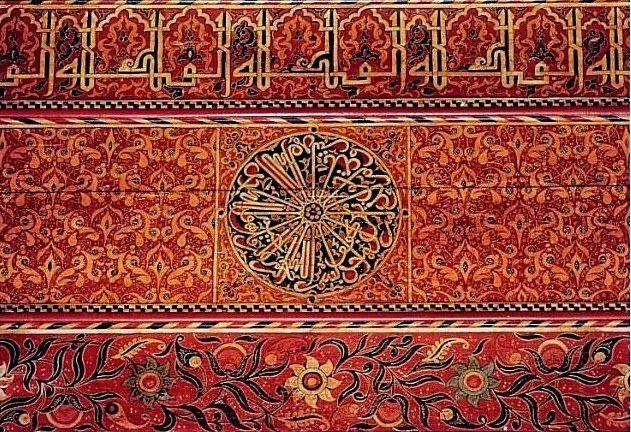
    Arabic calligraphy carved and painted in red and gold

    So, how do we make this practical? Some brief reflections:

    1. Change first occurs in the soul or self (al-nafs).
      At the level of the soul, we must understand virtue—what traits and behaviours harmonize with the Divine and which are distortions? Upon clarifying one’s moral compass, we keep ourselves on the path through taking ourselves to account regularly (muḥāsabah) and watching over our souls at every moment (murāqabah).
      At the level of the mind, we must study the history of civilizations. Through this history, we take lessons from the ever-shifting and complex interplay of spiritual, political, economic, and other social factors that lead to the different moments of success and regress in human life. Additionally, we must study our current reality in all of its complexity and evaluate it. Through this, we can effectively identify what elements lead to benefits and which lead to harm.
    2.  Islam is not just a monastic inner quest. Rectifying one’s character is an inner movement that explodes onto the external reality. So, as we reform ourselves and evaluate our circumstances we must communally struggle to create social realities that facilitate our paths toward the Divine. 

    As we attain Divine assistance and our circumstances revive, we can both take comfort in and heed the corresponding Divine norm found in:

    Surat al-Anfāl 8:53

    ذَٰلِكَ بِأَنَّ ٱللَّهَ لَمْ يَكُ مُغَيِّرًا نِّعْمَةً أَنْعَمَهَا عَلَىٰ قَوْمٍ حَتَّىٰ يُغَيِّرُوا۟ مَا بِأَنفُسِهِمْ ۙ وَأَنَّ ٱللَّهَ سَمِيعٌ عَلِيمٌ

    That is because God never changes a blessing that He has bestowed on a people unless they change what is in their own souls, and God is all-hearing, all-knowing. 

    This verse is distinct from the prior verse. This verse informs us that if we are currently being blessed as a community, God will maintain that state of blessedness until and unless we collectively turn wayward. This further emphasizes our point earlier that we are the authors of our reality through God’s granting us will.

    The quest for enlightenment never ends. But He will help stabilize our affairs so long as we are individually growing and collectively growing as a community.

  • Eid al-Aḍḥā  2020

    Eid al-Aḍḥā 2020

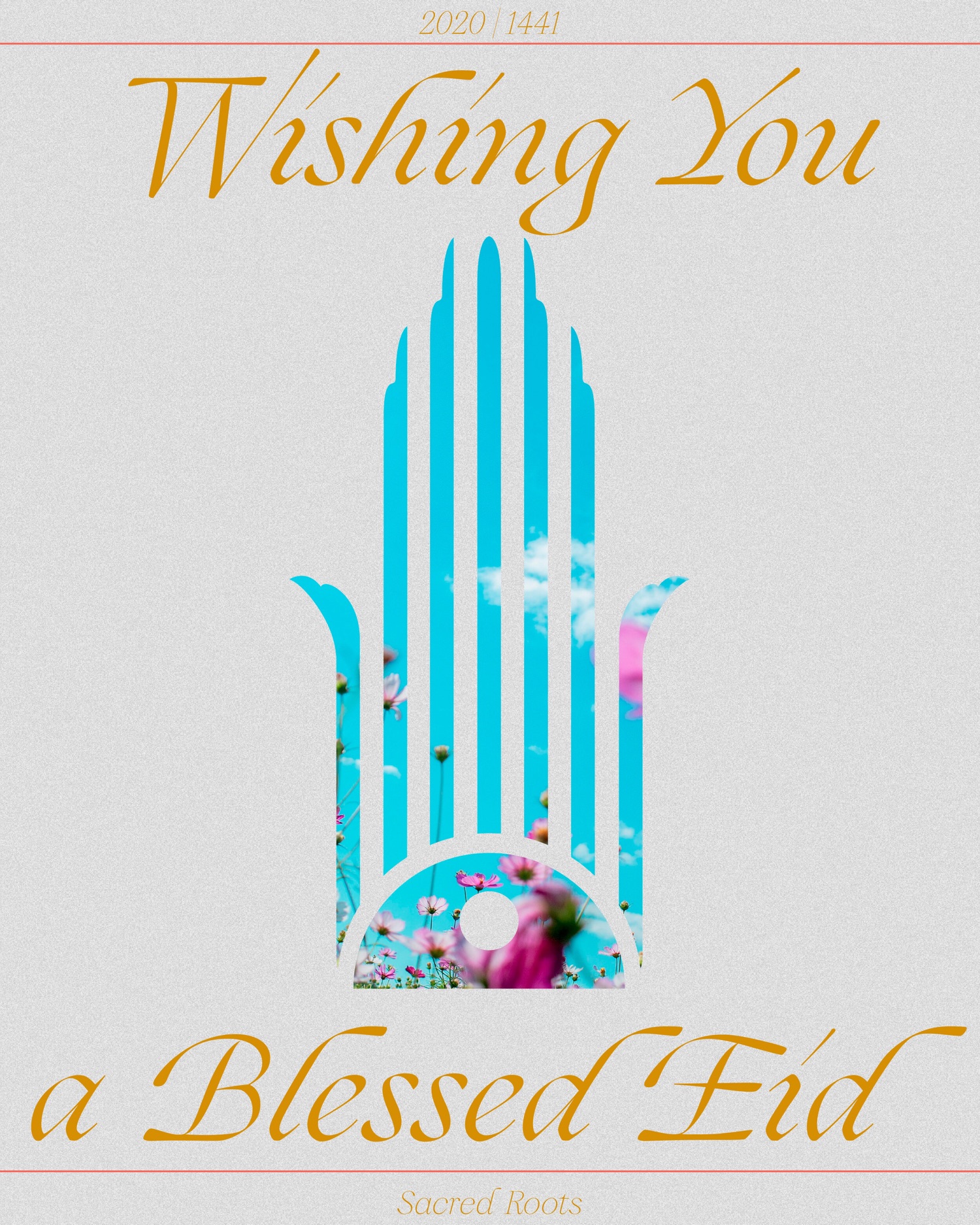
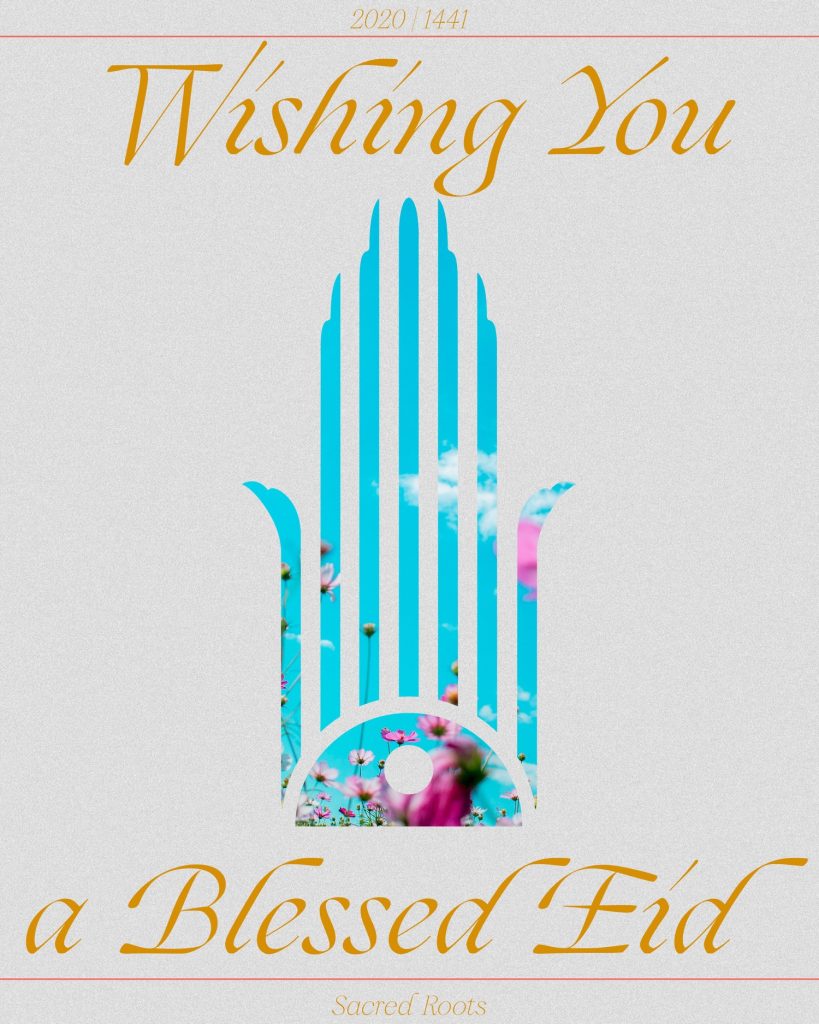
    Sacred Roots Eid al-Aḍḥā card: “Wishing You a Blessed Eid”, 2020 | 1441

    فَلَمَّآ أَسْلَمَا وَتَلَّهُۥ لِلْجَبِينِ
    وَنَـٰدَيْنَـٰهُ أَن يَـٰٓإِبْرَٰهِيمُ
    صَدَّقْتَ ٱلرُّءْيَآ ۚ إِنَّا كَذَٰلِكَ نَجْزِى ٱلْمُحْسِنِينَ

    So when they had both submitted [to Allah’s will], and he had laid him down on his forehead,
    We called out to him, ‘O Abraham!
    You have indeed fulfilled the vision! Thus indeed do We reward the virtuous!

    Q. Sūrat al-Ṣāfāt, 37:103-105


    The Sacred Roots team wishes you and your family a beautiful and blessed Eid al-Aḍḥā!

    As with every Eid, this Eid is a time for celebration and gathering with family and friends.

    But, just as with Eid al-Fitr this past year, we have been tested with the presence of COVID-19. Many of us are struggling financially. Many of us are struggling spiritually and emotionally—the effects of being distant from loved ones and friends and of an uncertain future. We have witnessed the strange images of an almost empty and clinical Hajj in Makkah.  

    But, in a sense, we are witnessing an instance of the deeper meaning of this Eid – the honor of patience and sacrifice. We honor the legacy of Prophet Abraham – Nabī Ibrahīm – on Eid al-Aḍḥā. He was tested with the command to sacrifice his son as a sign of his devotion to God.

    37:103. So when they had both submitted [to God’s will], and he had laid him down on his forehead, 104. We called out to him, ‘O Abraham! You have indeed fulfilled the vision! 105. Thus indeed do We reward the virtuous!

    He followed through, with his son’s assent, and due to their deep devotion, his son was saved and a ram was slaughtered in his son’s stead.

    His entire life was a life of trial and tribulation paired with a response of patience and thankfulness to his lord. He embodied the following verses of the Qurʾan.

    2:155. We will surely test you with a measure of fear and hunger and a loss of wealth, lives, and fruits; and give good news to the patient 156.—those who, when an affliction visits them, say, ‘Indeed we belong to Allah, and to Him do we indeed return.’ 157. It is they who receive the blessings of their Lord and [His] mercy, and it is they who are the [rightly] guided.

    So, congratulations! We have been honored to commemorate another day celebrating the legacy of Abraham! Give out sweets, call friends and family, celebrate!

    And let us also commit to shaping our lives in the mold of Abraham’s. Let us struggle for Truth and Justice and find balance even as the world seems increasingly confusing.

    Today, let us examine our friendship with our Lord – we celebrate the legacy of Abraham, the Friend of God (Khalīl Allāh), but where do we stand with God?

    And today, let us make a commitment to compassion. On this day, many people pay to have cattle slaughtered and its meat given to the poor. Let us keep the spirit of compassion alive throughout the year. Give to those struggling financially. Strengthen your friendships. Be an ear for those struggling emotionally. Call the elderly. Hug your children.

    Q. 11:75. Abraham was indeed most forbearing, plaintive, [and] penitent.

    We ask God to protect everyone’s health and well being. We hope to be able to commune with you all in person one day soon. And we pray that we, as a community, can fulfill the Abrahamic Legacy,


    The Sacred Roots Team


  • Sacred Roots Chronicles – Ramadan 2020 | 1441

    Sacred Roots Chronicles – Ramadan 2020 | 1441

    إِنَّ هَٰذِهِۦٓ أُمَّتُكُمْ أُمَّةًۭ وَٰحِدَةًۭ وَأَنَا۠ رَبُّكُمْ فَٱعْبُدُونِ
    Indeed this community of yours is one community, and I am your Lord. So worship Me.
    Q. Surat al-Anbiyāʾ 21:92

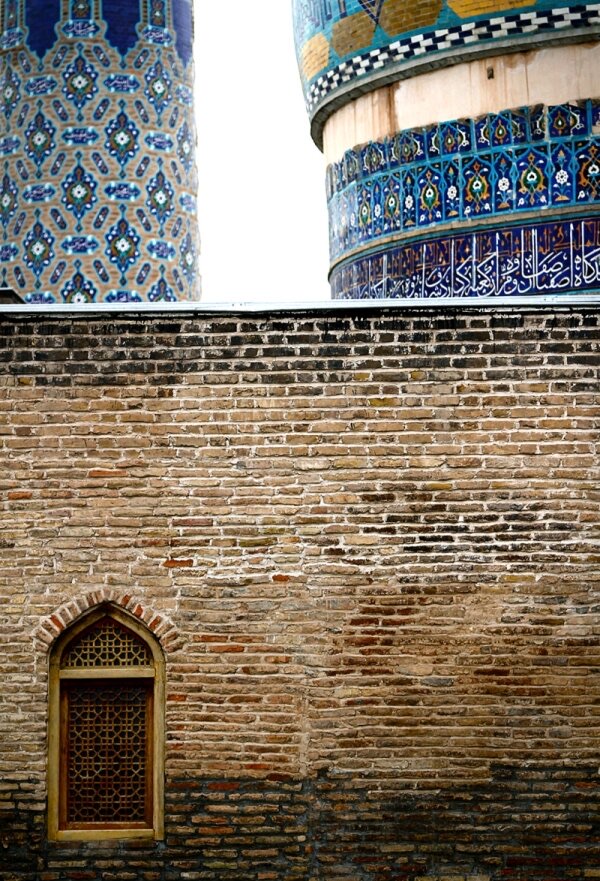
    A brick wall below tiled minarets at the Martyrs’ Mosque in Mashhad, Iran

    The Sacred Roots team began planning for its first set of Ramaḍān programs in early 2020, eager about its first public-facing programs to celebrate the spiritual bounty of the month of Ramaḍān in Chicago. We were excitedly planning catering, programming, and were on our way to sending out invitations. However, in late February it became clear that we would not have the opportunity to commune with our burgeoning community in person due to the onset of the COVID-19 pandemic. Thankfully, our team was nimble enough to shift into virtual gear.

    We are happy to report that, while it certainly was not in our initial plans to launch as a virtual community, our variety of virtual programs ran smoothly and received consistent compliments. Considering that the pandemic would limit our ability to engage with friends and family communally, we attempted to shape our programming around interactive conversations rather than lectures. To this end, we hosted three weekly programs:

    • The Early Rise virtually simulated a communal saḥūr; we gathered, exchanged stories, and reflected on a Covidian Ramaḍān. It was also a place of spiritual learning through a brief piece of spiritual advice; over the 4 weeks we explored the purposes and form of the Night Prayer (ṣalāt al-layl), the role of silence in strengthening connection with the Divine, the objectives of the worshipper during the Night of Ordainment (Laylat al-Qadr), and the importance of forgiving our friends and family for our spiritual journey. We had a small but regular group of attendees who joined us in the early-morning hours each Sunday. We ended an hour before prayer so that we could put theory into practice and spend time in vigil before Fajr.
       
    • Chai Chat was our interactive gathering where we put various Islamic teachings in conversation with contemporary social concerns. This was our most popular program, regularly drawing between 40 and 50 attendees with a core contingent of about 30 regulars. The conversations were dynamic and insightful. We read four articles to examine issues ranging from, but not limited to, Islamic culture creation, race in our communities, religious freedom, ethical approaches to the environment, communal living arrangements, and dynamic family life. We read:
      • “Think Little” by Wendell Berry
      • “The Nuclear Family Was a Mistake” by David Brooks
      • “Christian and Countercultural” by Rod Dreher
      • “Holding Our Own – Is the future of Islam in the West communal?” by Hamid Shadi
         
    • The Biblio Collective was our virtual Ramadan reading circle. We started and completed The Qurʾan in Islam by ʿAllamah Tabatabaʾi. This program brought in close to 30 regular readers each week to discuss a text that centers the Qurʾān as part of the Muslim’s spiritual and intellectual life. The text covered big picture ideas regarding the spiritual purposes and meanings of the Qurʾān as well as specific issues relating to issues of the Qurʾān’s transmission and the history of Qurʾānic exegesis (tafsīr) in the Muslim community.

    To our surprise, we drew in regular participants from North Carolina, Texas, California, and New York in addition to our primary Chicago audience—we even had a couple of participants from Turkey and the Philippines. New friendships among people from across the country have developed due to the collaborative nature of our programs; we pray that those new friendships are deepened into the future.

    Thank you to our community who helped make these programs possible through your contributions, advice, and participation.

    ؞ ؞ ؞
    Feedback from our participants:

     “I know I for one am glad you were able to go virtual as many of us non-Chicago people  are able to benefit now. It worked out for us!”

    “From my husband and myself, we thank you for this incredible space”

    “Salaamun Alaikum, Just wanted to thank you for the excellent chai chat discussions…I will truly miss these gatherings and hope you choose to continue some version of this in the future”

    “Firstly, I wanted to thank you for all your efforts and for truly unprecedented level of Ihsan that has marked your work with SR from the start…”

    “Grateful that I could contribute. May Allah continue to bless you and the Sacred Roots Community. I hope to visit the space when it is ready…”

    “Loving what you guys are doing masha’Allah. Allah grant you tawfīq and taysīr, āmīn!”
    ؞ ؞ ؞

    Due to popular demand and our continued need for social distancing in Chicago, we are continuing our Chai Chat and Biblio Collective programs virtually throughout the summer—we list the details on the Events section of our website.

    With that said, we are excited about continuing to build our community locally in Chicago and are hoping to weave our newfound national audience into our future programming. To that end, we are continuing to monitor the national health circumstances to decide on the appropriate time for opening a space in the city. The COVID-19 situation has forced us to be virtual for the time being, but the ultimate need is for a physical space for Chicagoans to commune, pray, study the legacy of the Messenger (ṣ) and his family (ʿa), and engage the broader Chicago community.

    Please continue to support our fundraising to this end and please pray for our team as we continue to navigate these current choppy waters.

    With prayers,
    The Sacred Roots Team

  • Eid al-Fitr 2020

    Eid al-Fitr 2020

    “Sacred Roots wishes you a blessed Eid”: illustration of families celebrating in a park

    قَدْ أَفْلَحَ مَن تَزَكَّىٰ

    وَذَكَرَ ٱسْمَ رَبِّهِۦ فَصَلَّىٰ


    Felicitous is he who purifies himself,

    celebrates the Name of his Lord, and prays.

    Q. Sūrat al-Aʿlā, 87:14-15


    The Sacred Roots team wishes you and your family a beautiful and blessed Eid al-Fitr!

    We pray that our community members’ fasts, nightly vigils, charitable giving, prayers, and acts of kindness throughout the month of Ramadan were accepted; and we pray that whatever good we have developed in ourselves this month will continue throughout the year.

    Eid al-Fitr 2020 will begin at Sunset on Saturday, May 23rd.

    The eve of Eid is a time for continued prayer and recitation of the Qurʾān throughout the night. There are many recommended prayers that you can find in prayer manuals.

    Eid is a day of love and of prayer. Despite the lockdown, let us spend the day in celebration with our families at home, give gifts, and pray together. Beautify yourself with clean clothing and fragrance. If you decide to pray the Eid prayer (Ṣalāt al-ʿĪd) individually or with your family at home it is recommended to have a meal prior to the prayer—so enjoy the first daytime meal and coffee.

    Eid al-Fitr is also a day of compassion. Paying Zakāt al-Fiṭrah – a purification of wealth that is given on Eid al-Fitr – to believers who lack the means of their necessities for a year is required on Eid. The head of household who has financial means should pay $10.00 per dependent to their respective community center that accepts and distributes Zakāt . It should be paid prior to offering the Eid Prayer or – if you don’t offer the Eid prayer – then prior to the beginning of the Noon (Ẓuhr) Prayer. You may also set aside the specific amount prior to the Eid Prayer in cash and hasten to distribute it once you have access to the community center or the people you seek to distribute it to. It is an act of worship, so the intention of growth toward God is necessary.

    Once again, congratulations! Despite difficult circumstances, we have, God willing, succeeded in commemorating the Month of Mercy. We pray that next year’s Ramadan and Eid can be spent, once again, with community in our places of worship.

    Please remember us in your prayers as we continue our next steps to building a community space in Chicago. In the mean time, we plan to continue to provide virtual programming until the pandemic situation is stable—we hope to send out a schedule soon.

    We pray for the health, well-being, and growth of you all,
    The Sacred Roots Team

  • General Goals for the Nights of Decree (Qadr)

    General Goals for the Nights of Decree (Qadr)

    Chapter 97 ؞ Sūrat al-Qadr

    In the Name of God, the All-beneficent, the All-merciful.

    Indeed We sent it down on the Night of Decree.

    What will show you what the Night of Decree is?

    The Night of Decree is better than a thousand months.

    In it the angels and the Spirit descend, by the leave of their Lord, with every command.

    It is peaceful until the rising of the dawn.

    بِسْمِ ٱللَّهِ ٱلرَّحْمَٰنِ ٱلرَّحِيمِ

    إِنَّآ أَنزَلْنَٰهُ فِى لَيْلَةِ ٱلْقَدْرِ

    وَمَآ أَدْرَىٰكَ مَا لَيْلَةُ ٱلْقَدْرِ

    لَيْلَةُ ٱلْقَدْرِ خَيْرٌۭ مِّنْ أَلْفِ شَهْرٍۢ

    تَنَزَّلُ ٱلْمَلَٰٓئِكَةُ وَٱلرُّوحُ فِيهَا بِإِذْنِ رَبِّهِم مِّن كُلِّ أَمْرٍۢ

    سَلَٰمٌ هِىَ حَتَّىٰ مَطْلَعِ ٱلْفَجْرِ

    The last days and nights of the month of Ramaḍān are of particular spiritual significance. While we may tend to want to rest on our laurels as the last days of fasting pass us by and the prospect of ʿĪd comes into view, our tradition teaches that during the last ten days the Prophet (ṣ) intensified his spiritual efforts and went into secluded worship. On the Nights of Decree (Qadr) he would stay up all night in vigil, orienting his soul toward God, and asking for well-being for the next year.

    While the last ten days and nights of the month are important, particular emphasis is placed on the 19th, 21st, and the 23rd nights of the month of Ramaḍān as the most probable to be the Night of Decree. Our scholars recommend various transmitted supplications, formal prayers, and acts of worship to be done throughout these evenings. You can find manuals of devotion such as Mafātīḥ al-Jinān in English that illustrate the various recommended acts of worship in depth.

    However, in order to avoid getting lost in the details, below are the high level priorities to keep in mind during these nights as we close out the Month of Mercy.

    General goals

     ؞ To ask for well being and sustenance for one’s self, family, and community
     ؞ To plead for forgiveness
     ؞ To plead for justice
     ؞ To spend some time studying the Qur’an and the religion generally
     ؞ To spend time in reflection thinking about one’s state, one’s goals for the year, and how to flourish while oriented toward God
     ؞ To spend some time, books and screens set aside, speaking openly and vulnerably to God

    Plan ahead

     ؞ Plan a light dinner (ifṭār) and plan the pre-dawn meal (saḥūr) ahead of time
     ؞ Plan a nap the day prior and, if able, take a half day at work the following day
     ؞ Plan which prayers and chapters of the Qur’an to read and read some of the translation beforehand
     ؞ Plan to engage meaningfully and don’t overtax one’s self with getting through every recommended act
     ؞ Plan to focus on the quality of connection – take your time

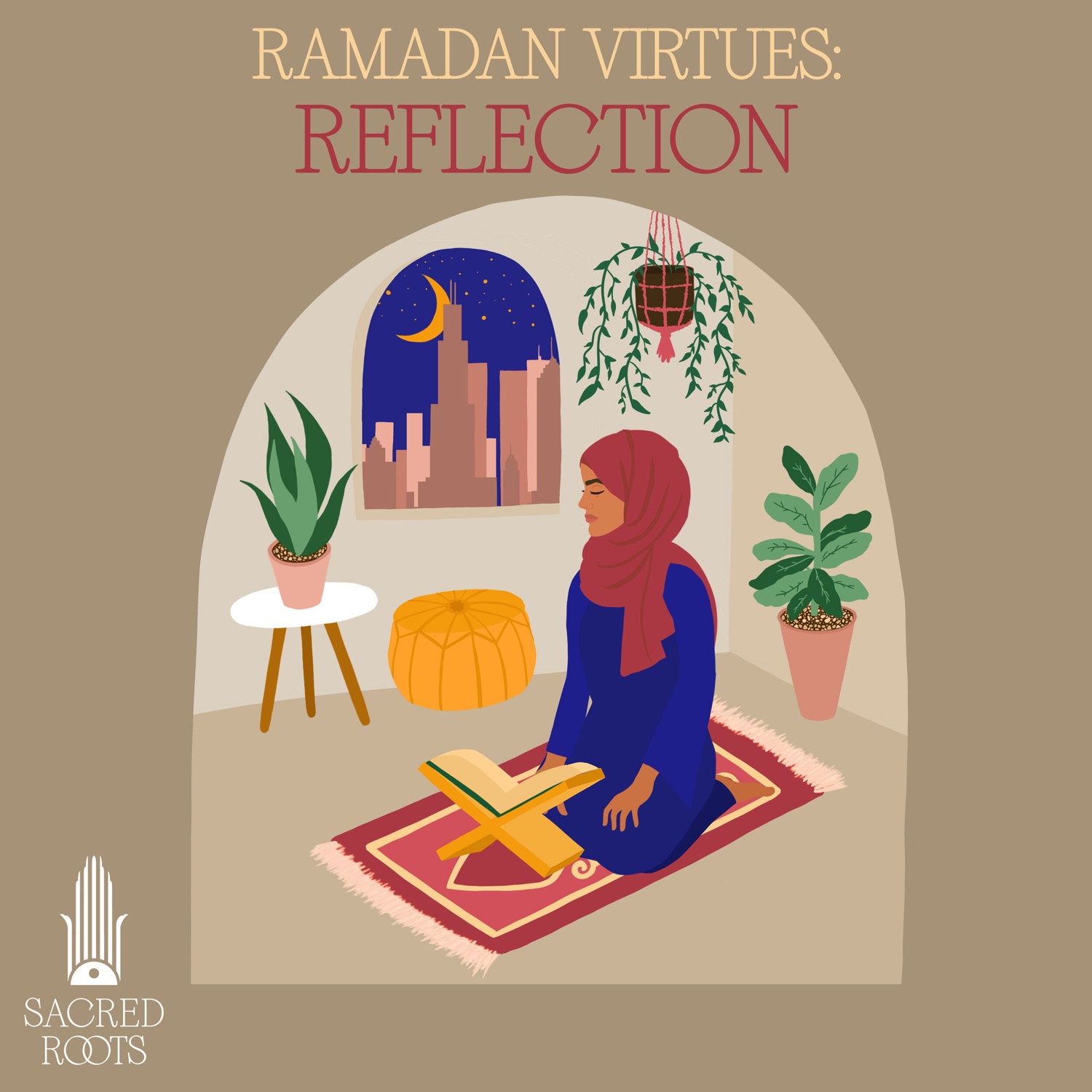
    “Ramadan Virtues: Reflection”: illustration of a woman reading the Qurʾān on a prayer rug at night
  • On the Path to Mercy: Striving Spiritually During the Month of Ramadan 2020 | 1441

    On the Path to Mercy: Striving Spiritually During the Month of Ramadan 2020 | 1441

    On the Path to Mercy: Striving Spiritually During the Month of Ramaḍān 2020 | 1441

    ﷽

    In the Name of God, the Compassionate, the Merciful


    As we approach the high season of spiritual and community life—Ramaḍān—those who live near communities or extended family gear up to gather at mosques or in homes to break the day’s long fast, to pray together, and to teach our little ones generosity and sharing. Our community centers gear up to feed the broad Muslim community, many of whom only attend during peak season.

    This year is going to be different. If someone works an “essential” job and must venture into crowds, then they live in a moment of high anxiety facing potential infection to earn a living. If we are lucky enough to work from home or if – God forbid – we have lost our jobs, then we live in a moment of lockdown and quarantine. As a community, we live apart from one another, interacting through pixelated representations on computer and phone screens. The COVID-19 pandemic will keep our mosques closed, our dinner invitations postponed, our congregational prayers performed alone, and our lectures attended virtually.

    But not all is lost. A state of radical uncertainty has its own unique upsides. The pandemic has torn asunder the illusion of our sense of existential independence. As the Qurʾān teaches in Surah Fāṭir 35:15

    يا أَيُّهَا النّاسُ أَنتُمُ الفُقَراءُ إِلَى اللَّهِ ۖ وَاللَّهُ هُوَ الغَنِيُّ الحَميدُ

    O mankind! You are the ones who stand in need of Allah, and Allah—He is the All-sufficient, the All-laudable.[1]

    We are utterly dependent on God, not just for our guidance and our sustenance, but for our very being; if God were to blink His eyes, so to speak, we would be annihilated without a trace. Amidst this crisis it is now clearer than ever that we are not in control—we are not in control of the larger economy, our personal wealth, our health, or our tomorrow.

    In that realization lies a key to potential spiritual refinement during Ramaḍān: our realization of total reliance on God humbles us. That humility places us in a better position to engage in beautiful and right action; it attunes us to obedience which ultimately brings us in harmony with the cosmos and the Divine. And that is the core purpose of our fasts during this month. As mentioned in Surat al-Baqarah 2:183

    يا أَيُّهَا الَّذينَ آمَنوا كُتِبَ عَلَيكُمُ الصِّيامُ كَما كُتِبَ عَلَى الَّذينَ مِن قَبلِكُم لَعَلَّكُم تَتَّقونَ

    O you who have faith! Prescribed for you is fasting as it was prescribed for those who were before you, so that you may be Godwary.

    In this verse, God not only informs us that fasting is an ancient rite of prior religious communities, He also tells us the purpose of our fasting: “so that you may be Godwary.” So, while we will miss out on big dinner gatherings, communing with family, and gathering in mosques, we have all gained an opportunity to engage in a quieter sort of heart-work.

    Be Vulnerable with your Self

    This newfound humility, borne by the pandemic, has made us ripe for the opportunity to sit with ourselves and engage in an honest moment of introspection and spiritual accounting (muḥāsabah). While Ramaḍān is the month of intensified Divine mercy wherein the smallest gestures of gratitude toward God are counted as great, and even our sleep is considered worship, we can only fully attain God’s Mercy during this month if we come face-to-face with our souls, be real with ourselves, and ask ourselves difficult and specific questions regarding our weaknesses and our strengths. Where do I stand in God’s eyes? Do I stack up to my own flimsy, human standards for myself? What faults and habits have I been ignoring because I am too afraid of them or too overwhelmed by the thought of digging them out of my soul? Have I been fooling myself?

    These questions are important because, yes, Ramaḍān is the month of God’s forgiveness, but it requires us to turn toward Him and to take steps. We are not fasting for Him in the sense that God needs our fasts. We need Him, so we fast to come near to Him through creating new spiritual attitudes and habits and leaving behind destructive vices and manners. Put another way, we fast for the good of our own selves, following Surat al-Isrāʾ 17:7

    إِن أَحسَنتُم أَحسَنتُم لِأَنفُسِكُم ۖ وَإِن أَسَأتُم فَلَها

    ‘If you do good, you will do good to your [own] souls, and if you do evil, it will be [evil] for them.’

    Merely foregoing food and drink during the day won’t do, as is narrated from Imam ʿAlī, “Many are the people who fast without partaking of anything except hunger and thirst!”[2] Some of us engage in the fundamental physical act of fasting, without refraining from problematic tendencies: laziness, gossiping, abusing, and other lapses that don’t break the outward form of the fast, but wholly conflict with the purpose of fasting: “so that you may be Godwary.”[3] Fasting is meant to activate a deeper exploration of ourselves, help us develop the strength to fortify ourselves from our corrupting inclinations, and animate our sacred aspirations.

    Strategize

    We often prepare for this month by listening to sermons or reading articles that highlight the major goals for the month of Ramaḍān: increase your reading of the Qurʾan, ask forgiveness, give charity. Those are solid starting points, but to most effectively activate Ramaḍān we should move beyond the general. After reflecting on our spiritual health, we can begin to think through our personal answers to the questions above and begin jotting a list of the bad habits we want to abandon[4] and of good habits we want to develop.

    With that achieved, we should begin crafting more specific goals. “I want to be better” is good in-and-of-itself, but it is not measurable enough; we want to be able to evaluate our accomplishments or lack thereof. We should make sure to get out of our own personal comfort zones as well; if we enjoy service and activism, then limiting our goals to similar activities may lead us to ignoring our weaknesses; if we enjoy reading the Qur’an, then simply adding to one’s daily recitation won’t stretch us. We can double down on the things we are naturally inclined toward—and that is important—, but crafting goals that come less naturally will help us see our spiritual blind-spots and help us grow in new ways. And we shouldn’t focus solely on acts, but we should evaluate our propensities and subtle points of personality—am I patient or is my temper short? am I generous or tightfisted? am I lethargic when it comes to responsibilities? am I present when interacting with my family? —and craft goals around changing our attitudes and the less concrete elements of our character.

    Our goals set, next we need to create meaningful plans to help us achieve those goals. If we want to dedicate more time to worship or recitation of the Qurʾan, then we need to set aside specific hours during the week for that purpose. If we want to volunteer, then we should identify an organization to work with or specific people to serve. If we want to make life easier on our families or spouses, we should ask them how we can lighten their load and plan which days we take on those tasks. If we are addressing something more subtle—say, our lack of presence or even sense of boredom when communicating with family—, then we can commit to behaviours that push us in the opposite direction: less screen time, active listening, looking them in the eye.

    The potential goals are myriad, so such are the plans, but crafting a handful of personalized, attainable goals and strategies will not only make our Ramaḍān more profound, it will set us off on a positive trajectory that will last the year over. Throughout the month we can re-evaluate our list of goals and refine our goals as the days go by, as we reflect and become more intimately familiar with our selves. And, with our effort and God’s support, we pray we will be on the path to Mercy.


    [1] All Qurʾanic translations in this piece taken from Ali Quli Qarai’s translation.

    [2] Shaykh Abbas Qummi, Mafatih al-Jinan: A Treasury of Islamic Piety, trans. Ali Quli Qarai, 461. See also: Nahj al-Balāghah, Bāb al-Mukhtar min Ḥikam Amīr al-Muʾminīn, ḥ. 145.

    [3] Q. 2:183

    [4] And keep this list private.